DevLog #1
Our founding period, the hunt for a workspace, our first big event TopTop, and what comes next.
Dear Robotic Systems Enjoyers,
We’ve wrapped up our founding period and our first big event, Topluluklar Toplanıyor (TopTop), the university’s annual student club fair. I wanted to take you through everything that has happened since the very beginning.
Normally you’d expect a robotics club’s blog to be full of robot designs, software builds, electronics, and competition prep. Don’t worry, we’ll get to all of that. But for this first post we wanted to go back a little: to the time before we had a robot, a workspace, or a competition to enter. Behind most student clubs there’s a long stretch of preparation that people rarely see, and it takes a lot more than engineering. It takes organizing, fundraising, dealing with bureaucracy, and managing a team. We don’t want this blog to be just a showcase. We want it to be an open engineering journal where we record our decisions, our problems, our failures, and what we learn along the way.
So, let’s start at the beginning.
How it all started
The seed of the idea came from our president, Yusuf, in February 2026. A month later, in March, he told me he wanted to start a robotics club, and I said I was interested and happy to join. The real work started over the summer.
We began with a founding team of three, and we weren’t exactly in the same place: one of us was in Italy on Erasmus, so we held our meetings online. Finding an electronics lead was also much harder than we expected. In mid-August we put together a member form and told our friends about the club, hoping to bring in people who were genuinely interested in robotics. Not long after, Aamir, who was in Pakistan on vacation at the time, joined the team, and in September Sude became our fifth board member. By the time TopTop rolled around, we had 22 people.
Our goal was never just to enter one competition. We wanted a broad foundation where we could build projects, do research, and compete. We pictured a place where students from different engineering disciplines could work on real problems and test what they build at international competitions. Designing a mechanism on paper is very different from building it, and writing an algorithm is very different from running it on a real robot. We want a club that lasts: members come and go, work gets handed over to newcomers, and each project becomes the foundation for the next.
Why RoboMaster?
Robotics is a huge field: industrial robots, autonomous vehicles, humanoids, and more. We were looking for a platform that brings mechanical design, electronics, embedded software, control, and computer vision together in a single project. That led us to RoboMaster.
What drew us to RoboMaster is that it isn’t just about completing individual tasks. Different systems have to work together in real time. Designing the drivetrain, building the electronics, writing the software, and integrating sensing aren’t enough on their own; everything has to function as one system. The competition also lets you test your solutions against real opponents in a dynamic environment, not just in the lab. Over time we started looking at the ARC Championship (ARCC) too, and we’ve set up a preparation plan aimed at the 2027 season. Of course, deciding to compete doesn’t mean you’re ready. We had to understand the rules, study the robot categories, research the hardware we’d need, and work out what it would all cost.
We needed a club before we could build a robot
As our technical goals took shape, we realized something else: to build a robotics project that lasts, you first have to build the organization behind it. Who works on what? How are decisions made? How do we track technical work? How does a new student find out what’s already been done? We started shaping our structure around those questions. Alongside the technical areas (mechanical, electronics, and software), we planned out sponsorship, communications, finance, and operations.
We also made documentation a priority from day one. When knowledge lives only in the heads of the people who built something, student teams run into a serious continuity problem. We want the technical decisions we make, the research we do, and the systems we build to be passed on to future members. It’s easy to plan all this on paper; we’ll find out how well it works with a real team over time.
The hunt for a place to work
Robotics isn’t something you can do from a laptop alone. We needed a physical space where we could make mechanical parts, build electronics, test prototypes, and work together as a team.
First, we emailed every department head and heard nothing encouraging back. So we started walking through the faculty buildings, talking to professors and staff in person. Then we emailed the deans of Engineering and Architecture and set up meetings. The Dean of Engineering, Professor Mehmet Polat, was warm and welcoming and genuinely eager to help. We’re very grateful to him. Through one of the vice rectors, we learned that the old boiler room in the School of Foreign Languages building was being converted for student clubs, and we asked for space there. But having a space doesn’t mean we can use it right away. It needs renovation and set-up, so we’ll have to wait a bit longer before we can move into our permanent space.
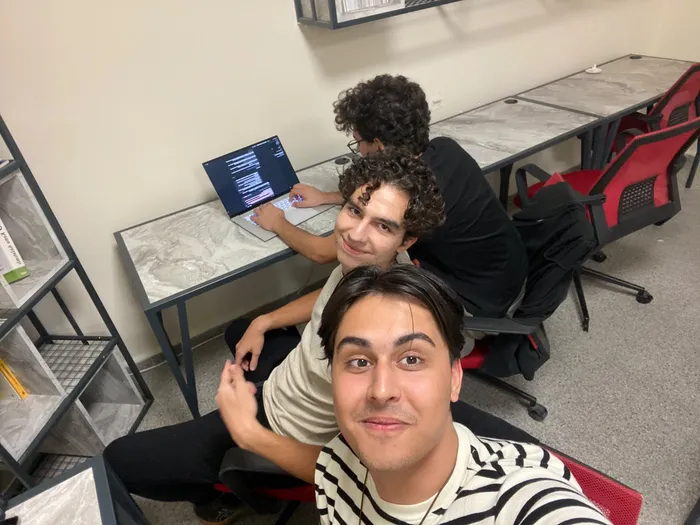
Until that’s done, we needed a temporary workspace. When we explained that to the Dean, he pointed us to Sinan, the Chief of Financial Affairs, and after talking with him we got a temporary room. We haven’t been able to move in yet, though. In the meantime, we’ve turned the Computer Engineering study hall into our unofficial workspace. We’re already planning how to lay out the permanent space: tables for mechanical work, electronics prototyping areas, spots for 3D printers, storage, and safe working conditions. The goal isn’t a perfect workspace on day one. It’s a practical one that we can start using with what we have and improve over time.
Becoming official, and finding our identity
At the same time, we had to turn our work into an official student club at the university. Most of this period went into defining our goals, writing our charter, setting up our structure, and meeting with the relevant offices. On the academic side, we reached out to faculty members, starting with our academic advisor, Professor Can Dede. We also met with Dr. Halil Tetik and Dr. Berat Alper Erol to talk about our plans. Along the way, we also talked about how to make the most of what the university offers and how to connect with academic work.
Our name and identity took shape during this time as well. For our visual identity, we drew on Al-Jazari, one of the great figures in engineering history, and his famous Elephant Clock. Living in the 12th century, he documented automata and mechanical devices in a book that still inspires people today. It felt like the right heritage for a robotics club.
On September 30, we received official approval to found the club. That was a big milestone for us, but it also meant moving from setting things up to actually running the club. In other words, the real work was only beginning.
The website and TopTop prep
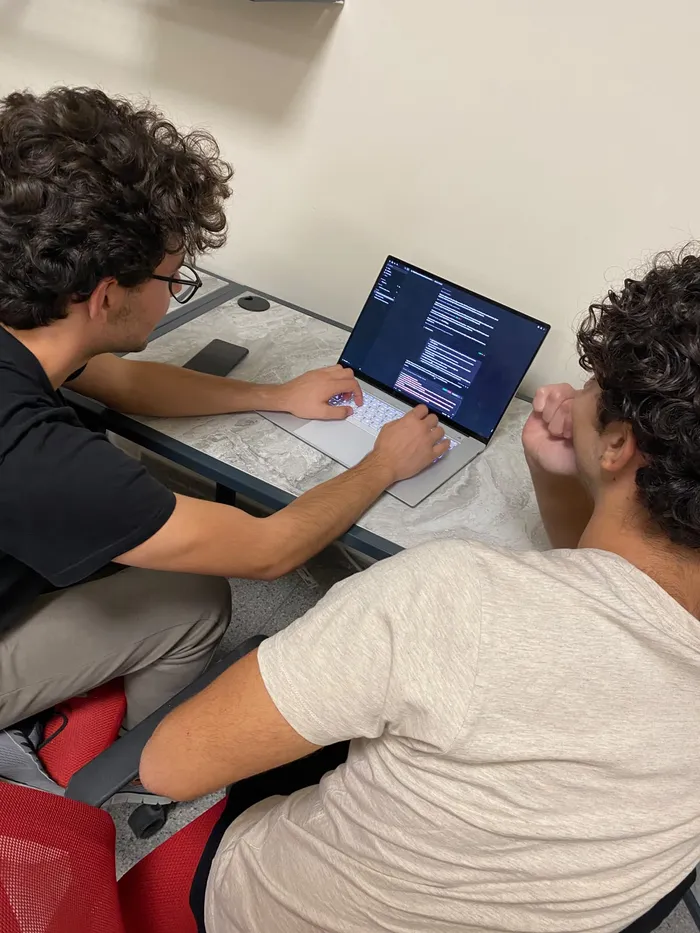
We built our website in that same study hall. With the help of AI, a few friends and I brought down the concept of the website. Finally, after hours of coding and brainstorming we came up with the website we have today. We started a week before TopTop and finished the day before the event. We prepared our sponsorship materials around the same time. TopTop prep was running in parallel: three days before the event we made the brochure for our booth, and one day before we put together a compilation video of competition matches, to catch people’s attention and give them a better sense of the competition we’re aiming for.
TopTop
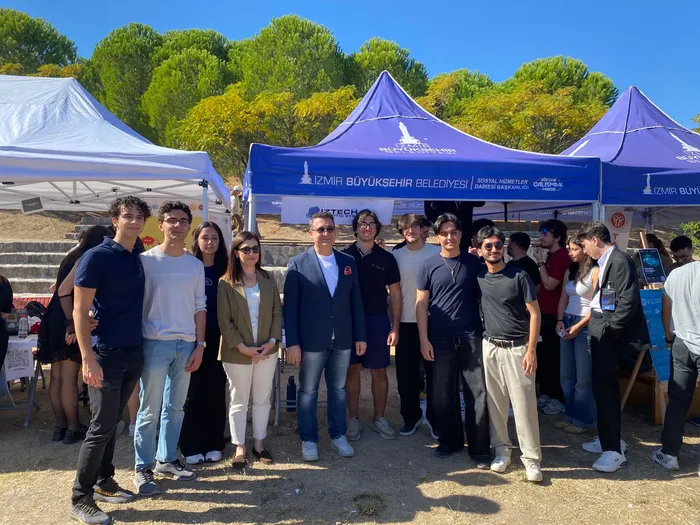
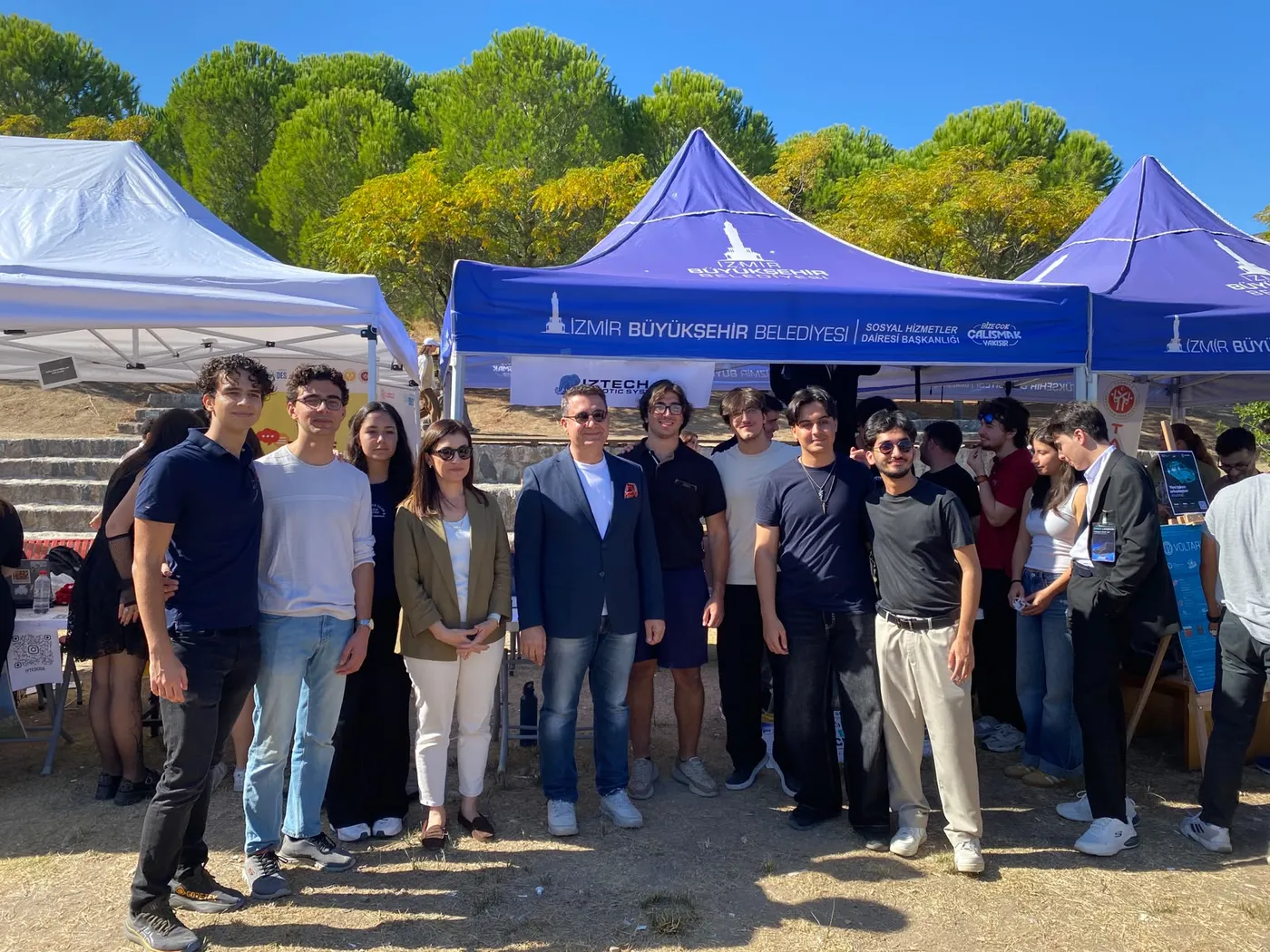
Our president went into TopTop with high expectations, but even I didn’t expect the success we had on day one. I came out of it really motivated. We got 50 applications that first day, and it was a lot of fun. On day two we realized our booth wasn’t easy enough to spot, so we printed a banner and hung it above the stand. We also turned our teammate Aamir into a walking billboard and sent him around the venue with our Instagram QR code taped to his back. Day two was calmer, but it was an important one: our Rector, Professor Yusuf Baran, visited our booth and asked us to support a high school robotics team. By the time TopTop wrapped up, we’d had another 15 applications from day two and 12 more afterwards, for a total of 77.
Where are we now?
After TopTop, we started reviewing applications, talking with potential sponsors, and planning our member intake. One sponsor has already given us a positive response. Applications will close soon, and our orientation meeting is coming up too.
At our Rector’s request, we’ll be mentoring the robotics team at Güzelbahçe 60. Yıl Anadolu Lisesi, a high school in İzmir. They want to compete in the Mega Futro category at IZTECH RoboLeague, a robotics competition hosted by our university. We’ve already had our first meeting with them and talked about how we’ll work together.
We’ve also added a dashboard to our website for the team. Members can add and remove tasks, see the road to ARC Robotics as a roadmap split by team, follow dependencies between tasks, and keep an eye on the overall process. We can assign an owner and deadline to every task, which makes tracking work much easier.
The technical side
While dealing with the founding process, we’ve also kept working on RoboMaster and ARCC. The first step on the technical side wasn’t opening CAD and designing a robot. First, we needed to understand the competition’s rules, its requirements, and possible design approaches. We looked closely at ARC Robotics’ 1v1 format, studying the field layout, the robots’ roles, and the requirements our systems have to meet.
On July 29, we met with Moses Wang, president of the RoboGrinder team at Virginia Tech. He told us about the competition process, the challenges they faced while building their robot, what a robot costs, and the ARC Robotics competition in general, and he answered some of our questions about the competition. We’re very grateful to him for taking the time to talk to us.
Along the way, we saw just how intertwined mechanics, electronics, and software are. A decision about the drivetrain, for example, doesn’t just affect the mechanical design. It also affects motor selection, power consumption, drive electronics, control algorithms, and the robot’s overall performance. So in our technical work, we try to focus not just on how to build one part, but on how different systems work together.
Right now, we’re turning our research into a body of knowledge that will support our technical reports and the prototypes we’ll build later. We’re writing the software, mechanical, and electronics reports that will be the foundation of the robot we’ll build for the competition. The mechanical report is finished, and we aim to finish the other two within a week. We haven’t solved every problem we’re working on, and for some questions we’ll need more research and testing before we know the right answer. That’s exactly what we plan to share on the technical side of this blog: why we chose a particular design, what alternatives we considered, what our calculations and experiments showed, backed by real data wherever we can.
The other reality: funding
In robotics, having a good technical idea doesn’t mean you can actually build it. Motors, control boards, sensors, electronic components, mechanical materials, manufacturing, and testing equipment all take serious resources. For a club aiming at international competitions, funding is a big part of staying sustainable.
We started our sponsorship efforts during the founding process, with the first steps being to identify potential supporters, put together a sponsorship package, and work out what we need. But we’re not just looking for a budget. Which parts to buy ready-made, which we can make ourselves, and which investments will pay off most in the long run are part of our technical planning too. With limited resources, we have to choose our priorities carefully, so we don’t treat financial planning and engineering decisions as separate things. In future posts, we want to share our budget planning, how we source parts, and how we use our resources.
What’s next?
Coming up: bringing in new members, deepening our technical teams’ work, getting our workspace ready to use, and building our first prototypes. We also need to move our sponsorship efforts forward, build out our documentation system, and settle into a long-term way of running the club. In short, there’s still a lot to do.
In future posts, we won’t just make announcements. We’ll cover our technical reports, our design process, the problems we run into, and what we learn about running a club. Some posts will look at how a mechanism was designed, others at developing an electronics system or a software problem we ran into. Sometimes we’ll talk about how running a student club turned out to be far more complicated than we expected. And chances are, a few posts will be about the long hours we spent trying to figure out why something we expected to work didn’t. That’s engineering for you.
Final word
Overall, we’ve made good progress in a short time. ARCC is held in the United States. If we keep this momentum up and the schedule is similar, I think we could be there competing in Season Two next June or July. By the end of this journey, we don’t want to have just built robots. We want to be a club that learns together, shares what it knows, and leaves a stronger starting point for those who come after us.
I wish all of us a year full of learning, hard work, and friendships that last well beyond graduation.
See you in the workspace! 🐘⚡
Doruk Serdem Şentürk
Software Captain / Board Member